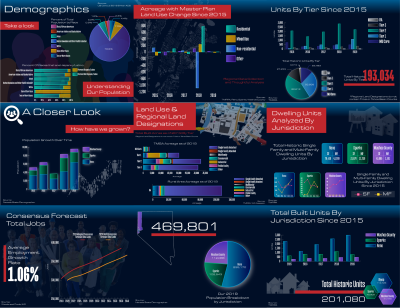
The Truckee Meadows Annual Report provides TMRPA, our partners, and residents with information to gauge the ongoing effects of growth and to assess cumulative impacts. Keep scrolling and you’ll get into the data that shapes our Truckee Meadows.
HOME MEANS NEVADA
Pricing out what is costs to live in Washoe County, both rental and ownership information, our median income and vacancy rates
The 2019 Regional Strategy for Housing Affordability outlines 35 actions designed to address key regional housing issues. These issues were identified in order to adapt the way the region works on housing to better keep pace with changing needs and demands in the future. To achieve the vision that, “all residents of the Truckee Meadows have access to a continuum of safe, accessible, and affordable housing options in neighborhoods that offer access to opportunity and a high quality of life,” the region will need to collaborate. TMRPA was tasked with various actions and has created the Affordable Housing Tracker in order to aide the Region in the following initiatives:
Action Item 0.3 – Maintain a Centralized Regional Inventory of Residential Land and Assets
Action Item 4.2 – Establish a Regional Preservation Early Warning System
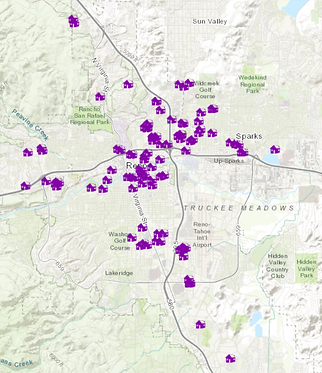
Reliable and readily available information about residential land and other housing assets in the region will support more efficient and impactful use of resources. To implement this, TMRPA has created an inventory of affordable housing, specifically subsidized housing projects and contract details. TMRPA compiled this information by using local and state resources. Staff has created an interactive map which will be updated on an annual basis, in which affordable housing can be spatially analyzed and assessed.
MANAGING OUR GROWTH
Land use in total built acres (gross) historically and in more recent years both jurisdictionally and by tiers, TMRPA land use regulatory project counts
TRUCKEE MEADOWS JOBS
The average employment rate, covered employment by industry in Washoe County and the difference in percent share of total covered employment since 2015
Established on May 9, 1868 and incorporated in 1903, the City of Reno covers 108 square miles and is home to over 273,000 residents. The City operates under charter with a Council-Manager form of government. Five elected Council Members represent each of the five wards, plus one at-large Council Member and the Mayor. The City provides a variety of municipal services to its residents. These include police, fire, emergency dispatch, courts, parks and recreation, street and traffic maintenance, wastewater and stormwater management, planning and development, business licensing, and others. Home to the beautiful Truckee River, the City of Reno is a thriving urban center known for world-class colleges, vibrant culture, diverse outdoor activities and innovative industries.
In its 2023 Annual Report, the City of Reno highlighted its efforts to implement the Truckee Meadows Regional Plan, which are summarized below.
The report describes Reno as a dynamic urban center with over 273,000 residents, a $982 million budget, and 22 departments providing essential municipal services. Guided by its 2020–2025 Strategic Plan, the City Council prioritized fiscal responsibility, housing affordability, sustainability, and downtown revitalization. Reno continued using TMRPA’s population forecasts to guide land use and service planning and advanced affordable housing initiatives by amending Title 18 of its Land Development Code to expand multi-family zoning, offer density bonuses, and expedite permits for affordable projects. In 2024, Reno allocated nearly $3.5 million in HOME funds, $17 million in Volume Cap, and waived over $3.7 million in fees to support the construction of more than 1,300 affordable units.
The city emphasized infill and redevelopment by refining its Sphere of Influence (SOI) and removing about 5,860 acres of public lands unlikely to be developed within 20 years. Several master plan amendments and one annexation were approved, reflecting controlled growth priorities. The updated zoning code cleanup, adopted in early 2025, further aligns city regulations with the Regional Plan. Through its Concurrency Management System, the city ensured that development aligns with infrastructure capacity in water, wastewater, transportation, and public safety. Reno collaborated with TMRPA on modeling and data sharing, contributing to the new Public Infrastructure Plan and providing GIS data to enhance coordination.
The city advanced sustainability goals by generating 1.6 million kilowatt hours of solar energy, winning the U.S. Conference of Mayors’ Climate Protection Award, and partnering on the Reno-Sparks Heat Campaign to identify temperature disparities across the region. Staff contributed to TMRPA’s natural resources planning, focusing on trails, watershed management, and environmental data integration. Reno also maintained active collaboration with local governments, state agencies, and tribal governments on housing, transportation, and land use through participation in the Regional Plan Update Working Group, coordination on AB213 housing implementation, and engagement in the 2050 Regional Transportation Plan. Looking ahead to 2025, the city plans to update the ReImagine Reno Master Plan, revise its Housing Needs Assessment, finalize the Accessory Dwelling Unit ordinance, and continue improving infrastructure planning. In 2024, Reno processed 199 planning and engineering cases, underscoring steady urban development management and regional alignment with TMRP goals.
Incorporated in 1905, Sparks now has a population of about 115,240, reflecting modest 1.25% growth from 2023. Long-term growth has shifted from post-1950s booms to more gradual increases, with forecasts projecting up to 136,700 residents by 2044. Median home prices rose to $549,168, leading the City to initiate a Housing Affordability Audit, set to conclude in 2025, aimed at updating zoning and affordability policies. The City continues to support diverse housing options and affordable housing projects using federal and state funding, including Community Development Block Grants, HOME funds, and state rental assistance programs. Notable projects include sidewalk and pedestrian improvements in older neighborhoods, rental assistance for over 300 households, and new land purchases for future affordable housing. Redevelopment efforts focus on Victorian Square, the City’s Mixed-Use Core, and Redevelopment Area #2, which includes the Sparks Marina and Oddie corridor. Projects in these areas include new housing, a hotel, and the “Oddie Project” community center.
Major capital improvements in FY23/24 totaled $23.4 million, covering roads, parks, utilities, and public buildings. Sparks co-manages the Truckee Meadows Wastewater Reclamation Facility (TMWRF), which treated 30 million gallons per day in 2024, reusing 1.6 billion gallons for irrigation and industrial purposes. The City also invested in stormwater systems, manhole rehabilitation, and transportation planning in coordination with the Regional Transportation Commission. The City prioritizes protecting slopes, wetlands, and the Truckee River, while also maintaining trails and open space and addressing air and water quality issues regionally. Policies promote sustainable development, water conservation, climate resilience, and expansion of the urban tree canopy. Sparks collaborates closely with the Truckee Meadows Regional Planning Agency (TMRPA) on population modeling, infrastructure planning, and development review. In 2024, 59 planning cases were submitted, with no new annexations approved. Looking ahead, Sparks plans to update its Comprehensive Plan in 2025 to align with the newly adopted 2024 Regional Plan.
Established in 1861, Washoe County was one of the original nine counties in Nevada. The County, which includes the Reno and Sparks metropolitan area, is the second most populous in the state. As of the July 1, 2021 Governor’s Certified Population Estimate, Washoe was home to a total of 485,113 residents. The unincorporated Washoe County portion of the total population estimate is 113,306 residents.
Envision Washoe 2040, Washoe County’s updated Master Plan, was adopted in early 2024. In regards to the Population Growth sections of the Regional Plan, Washoe County’s Master Plan is guided by the consensus forecast and prioritizes addressing housing affordability, access, and diversity. They are committed to providing solutions for the housing needs of residents throughout the County, and in 2024 the County advanced several key initiatives by amending their development code to reduce regulatory barriers, increase housing options, and promote affordability. Additionally, the County is also working on another housing code amendment that introduces “missing middle” housing types, such as triplexes, cottage courts, and small-scale multifamily units. Public outreach for the potential amendment was conducted in 2024, and further work on this and other housing-focused code amendments will continue into 2025.
When considering Regional Form, Washoe County is dedicated to working closely with partner agencies to manage growth in the region and pursue shared goals, such as regional economic vitality, land use compatibility between jurisdictions, and an effective and interconnected transportation system. In 2024, the County reviewed three Master Plan Amendments.
The Public Facilities and Services sector highlighted key capital improvement projects, such as the Hidden Valley Phase 2 Project which includes the installation of a new pipeline to convey recycled water from Washoe County’s South Truckee Meadows Water Treatment facility to Hidden Valley for a total project cost of $3,376,007. This project reduces dependence on imported water, helping to conserve our region’s precious Truckee River and groundwater resources. Another project is the NV Cares Campus Phase 3 Intake Center Project, which aims to expand the shelter capacity to support individuals affected by homelessness, exacerbated by the COVID-19 pandemic and subsequent rise in unemployment and housing insecurity for a project cost of $28,274,566.
In terms of Natural Resources, Washoe County accomplished many environmental strides for the Region in 2024, including controlling noxious weeds on approximately 346 acres of park and open space property by treating the areas with herbicide. The County has also been working on restoration and recovery efforts at Davis Creek Regional Park following the Davis Fire, which included partnering with the Sugarpine Foundation to host a volunteer event where 250 sugar pine trees were planted. Another highlight of the County’s efforts include using goat grazing services to reduce noxious weeds for over 15 acres at the Swan Lake Nature Study Area.
Overall, the County demonstrated a proactive approach to address population growth, enhancing public facilities and services, preserving natural resources, and collaboratively planning for future development in the Region during 2025.
The AQMD’s mission is to ensure compliance with the U.S. Environmental Protection Agency’s National Ambient Air Quality Standards (NAAQS) for six pollutants: ozone, particulate matter (PM₂.₅ and PM₁₀), carbon monoxide, nitrogen dioxide, sulfur dioxide, and lead. While most of Washoe County currently meets these standards, preliminary 2024 data indicate that the southern part of the county may be violating the 24-hour PM₁₀ standard, and both ozone and PM₂.₅ levels are nearing exceedance thresholds. Wildfire smoke in recent years and ongoing population growth have contributed to elevated pollutant concentrations.
A central focus of the report is the Ozone Advance Program, a voluntary initiative designed to reduce ozone precursor emissions. The program’s strategies include cutting emissions from both road and non-road vehicles, mitigating urban heat island effects, improving building efficiency, and promoting informed land-use and transportation planning. These efforts depend on cooperation among regional agencies and local governments. The AQMD also aligns its work with population growth and regional form policies by encouraging consistent planning assumptions, prioritizing infill development, and discouraging car-dependent projects in Tier 2 and 3 Lands. Transportation conformity remains a critical element, ensuring that local transportation plans meet air quality goals. The Second 10-Year Maintenance Plan, adopted in June 2024, demonstrates that local emissions will not cause PM₁₀ violations through 2036 and beyond.
Natural resources and climate policies also play a significant role. The AQMD promotes initiatives that link air quality improvement with urban forestry, open space connectivity, and climate resilience. Notable efforts include the 2024 urban heat mapping campaign and a letter of support for urban tree planting grants. However, several challenges persist. Population growth, especially in auto-dependent areas, is expected to increase vehicle miles traveled at a faster rate than population growth itself. In addition, the EPA’s recent tightening of the PM₂.₅ standard from 12 to 9 micrograms per cubic meter introduces stricter regulatory requirements, and the agency’s upcoming review of ozone standards in 2030 could further complicate compliance.
Despite these challenges, the report identifies several opportunities for progress in 2025. The Smart Trips program offers a model for reducing transportation-related emissions through employer-based initiatives. Integrating air quality strategies with existing regional, sustainability, and climate plans can also amplify their impact. Encouraging EV-ready building codes can help reduce tailpipe emissions, while developing a High Occupancy Vehicle (HOV) Master Plan and conducting a commuter rail feasibility study between Sparks and the Tahoe-Reno Industrial Center could substantially lower vehicle emissions and congestion. Overall, the AQMD emphasizes cross-agency collaboration and proactive urban planning to balance growth with clean air goals. Reducing vehicle miles traveled, addressing urban heat island effects, and coordinating land use and transportation decisions remain essential strategies for maintaining air quality standards and ensuring a healthier, more sustainable Truckee Meadows region into 2025 and beyond.
Washoe County Health District’s Environmental Health Services Division oversees solid waste in Washoe county. Most solid waste in the county is disposed of at the Lockwood Regional Landfill, with smaller portions sent to the Russell Pass and Carson City landfills. Solid waste collection, transportation, disposal, and recycling are handled through franchise agreements between waste haulers and local jurisdictions, including the cities of Reno and Sparks, Washoe County, and the Incline Village General Improvement District, which all receive franchise fees. Existing transfer stations are currently sufficient to meet regional needs, but ongoing population growth and housing development may soon require reassessment of service levels and recycling infrastructure. Discussion continues regarding the construction of a new transfer station in South Reno, and further research is recommended to explore business opportunities related to recycling and the recovery of recyclable materials in the region.
Data compiled by the Nevada Division of Environmental Protection indicate a decrease in the municipal solid waste (MSW) recycling rate from 29.87 percent in 2022 to 24.91 percent in 2023. The largest declines occurred in paper and single-stream recycling. While the causes of this reduction are not fully known, differences in data collection and reporting may be factors, and staff are working with NDEP to improve the accuracy of future reporting. For 2023, the amount of domestic solid waste disposed of at the landfill was 558,413 tons, while industrial and special waste totaled 351,835 tons, based on 2022 data. The total waste generated in the county was 1,290,421 tons, including 185,268 tons of recycled municipal solid waste and 194,906 tons of recycled construction and demolition debris. This results in an overall recycling rate of 29.46 percent. The report concludes that while current waste management infrastructure is adequate, declining recycling rates and regional growth trends suggest the need for continued monitoring, data evaluation, and potential investment in new facilities and recycling initiatives.
The Regional Transportation Commission (RTC) of Washoe County, established in July 1979, integrates the efforts of the Regional Street and Highway Commission, the Regional Transit Commission, and the Washoe County Area Transportation Study Policy Committee. This consolidation enhances the efficacy and efficiency of surface transportation planning and implementation in Washoe County, including the cities of Reno and Sparks, and surrounding unincorporated areas.
RTC fulfills three main roles: serving as the Metropolitan Planning Organization (MPO), providing transit services, and constructing the regional roadway network. As the MPO, RTC engages in both short- and long-term multimodal transportation planning aligned with federal guidelines. The RTC RIDE system, including 19 fixed routes, RTC FlexRIDE, RTC ACCESS paratransit service, and RTC VANPOOL, facilitates approximately 5.3 million trips annually.
With regard to population growth and policies in PG, Chapter 3, Section 1 of the 2019 Truckee Meadows Regional Plan outlines policies on population forecasting, leveraging TMRPA forecasts for local planning, and strategies to promote affordable housing. RTC uses TMRPA’s consensus forecasts to populate Traffic Analysis Zones (TAZs) in its Travel Demand Model, predicting traffic congestion and analyzing potential roadway improvements and emissions data to comply with federal Transportation Conformity standards. Additionally, RTC has collaborated with TMRPA on an Affordable Housing Study to identify sites conducive to affordable housing near viable transit routes, aiming to alleviate transportation costs for low-income households.
Chapter 3, Section 2 emphasizes managing growth within the Truckee Meadows Service Area (TMSA) and prioritizing development in core areas over peripheral expansion. RTC’s project prioritization framework for the 2050 Regional Transportation Plan (RTP) aligns with these goals, favoring projects within the TMSA, especially in Mixed Use Core and Tiers 1-3, to enhance density and land use intensity. This strategy promotes efficiency and cost-effectiveness, reduces vehicle miles traveled (VMT), encourages alternative transportation modes, and supports RTP guiding principles and goals, ultimately benefiting regional air quality and compliance with federal standards.
Chapter 3, Section 3 aims to coordinate the provision of public services and facilities through established standards, addressing key elements like potable water, wastewater, flood control, transportation, and schools. RTC’s RTP includes a 20-year fiscally constrained transportation improvement project schedule, ensuring that projects can be implemented with available revenue sources. The RTC Capital Improvement Program (CIP) outlines the costs for projects within the first ten years of the RTP, forming the basis for the Regional Road Impact Fee (RIFF) Program. Most capital expenditures are directed towards the Mixed-Use Core and Tier 1 of the TMSA, with anticipated growth and corresponding transportation investment in Tiers 2 and 3 from 2031 to 2050.
Chapter 3, Section 4 discusses the management of natural resources, including air and water quality, open space, and sustainable development practices. RTC’s Sustainability Plan, an integral part of its guiding principles, focuses on implementing sustainable practices in projects and services. Efforts include the development of Complete Streets projects, an accessible bicycle and pedestrian network, and a formal active transportation program. RTC’s transit system, including Bus RAPID Transit, fixed routes, paratransit, intercity, and on-demand services, significantly contributes to regional sustainability. The FlexRIDE microtransit service, launched in 2019, now operates in multiple areas and provided nearly 138,000 rides in FY2024. Additionally, RTC aims to operate a 100% alternative-fueled fleet by 2035, with significant progress made through hybrid and zero-emission buses, and an upcoming hydrogen fuel cell initiative. Additionally, In FY2024, RTC was able to provide 5.3 million rides on RTC RIDE (fixed route) including over 1.4 million rides on the two RAPID routes.
Chapter 3, Section 5 focuses on the coordination among various jurisdictions and entities to implement the Regional Plan. RTC collaborates with Washoe County, the Cities of Reno and Sparks, and TMRPA, alongside other stakeholders, in developing the RTP. The project selection criteria incorporate safety, land use compatibility, multimodal connectivity, travel demand, and community input, aligned with regional and local policies. Projects are identified through previous RTPs, corridor plans, safety assessments, public comments, and input from multiple advisory committees.
The RTC develops the Regional Transportation Plan (RTP) in coordination with its partner entities such as Washoe County, the Cities of Reno and Sparks, the Reno-Sparks Indian Colony and TMRPA. In addition, the RTP is developed through input from other stakeholder agencies and extensive public outreach. The same holds true for individual project development. The RTP process incorporates several project selection criteria, including safety, land use compatibility, level of multimodal connectivity and operational improvement, travel demand, and community input; all through the context of regional and local policies. RTC is committed to consistent engagement with regional stakeholders including tribal entities to foster coordination and enhance mutual understanding of land use activities in the region.
The Reno-Tahoe Airport Authority (RTAA) owns and operates the Reno-Tahoe International Airport (RNO) and the Reno-Stead Airport (RTS). RTAA is a quasi-municipal corporation that was created by the Nevada State Legislature and began operation on July 1, 1978. The RTAA is an independent entity that is not part of any other unit of local government and does not use local property or sales tax revenue to fund its operation. The mission of the RTAA is to maintain and grow aviation services and facilities, as part of the global transportation system, to transport people and goods to benefit the region, while also being financially self-sufficient.
The RTAA is an affected entity, as defined by Nevada Revised Statutes, due to its role as a regional agency having responsibility for planning or providing transportation facilities, specifically aviation transportation facilities.
Airport growth is influenced more by economic and global trends than by local population changes. Forecasts for air traffic and cargo rely on FAA-approved data, which guides infrastructure planning. The RTAA also completed a landside forecast identifying future needs for parking, rental car, and curbside facilities.
Major development projects advanced during 2024. At RNO, Stellar Aviation opened a new fixed-base operator (FBO) facility, and Tolles Development completed the Airway Commerce Center, a non-aviation commercial complex. Preparations also continued for a large-scale air cargo relocation project in the airport’s southwest quadrant. At RTS, Dermody Properties began multi-phase industrial development projects, while plans for a potential $1 billion battery gigafactory by Lyten were under negotiation.
Infrastructure investment remained central through the MoreRNO modernization program, which includes new concourses (New Gen A & B), a Ground Transportation Center, a Central Utility Plant, and a new administration and police headquarters. These projects are funded through FAA grants, bonds, and user-based charges such as Passenger Facility Charges (PFCs) and Customer Facility Charges (CFCs). Federal Bipartisan Infrastructure Law (BIL) and Airport Terminal Program (ATP) grants also contributed to funding.
The RTAA continues to emphasize sustainability, focusing on economic viability, efficiency, conservation, and community responsibility. New terminal facilities are designed to achieve LEED Silver Certification, targeting major reductions in energy, water use, and waste. Recycling programs, green purchasing, and pavement reuse further support environmental goals.
Regionally, the RTAA collaborates with local governments and transportation agencies to ensure compatibility between airport operations and community planning. Looking ahead to 2025, RTAA plans to continue major construction under MoreRNO and finalize FAA approvals for new developments, reinforcing its role as a key driver of regional mobility and economic growth.
The Sun Valley General Improvement District is a quasi-municipal entity established in 1967 under Nevada Revised Statue, Chapter 318 and is chartered to provide water, sewer, garbage, and recreation services throughout the Sun Valley community. SVGID acts as a local governmental agency for the residences of Sun Valley and continually monitors State, Regional and local issues that could potentially affect the District’s customers. SVGID board members and staff actively serve on several local boards such as: The Western Regional Water Commission, Northern Nevada Planning Commission and Truckee Meadows Water Reclamation Facility Management Committee.
SVGID conducts near and long-term planning for its current service area and the approved service boundary. The water and wastewater master plan identifies the infrastructure that meets the current needs of its residents and the future improvements required to service its build out. The SVGID Board of Trustees establishes water and wastewater rates, sets policies and maintains a close relationship with its constituents to ensure that the community needs are being met. The District works with other local agencies as members of the Nevada Association of Counties to promote growth, business and quality of life.
For the 2024 Annual Report Sun Valley General Improvement District’s water capital improvements included System Mapping GIS for $3,460.01, Future Shop Expansion Improvements $8,040.22, Water Master Plan Update $14,305.00, Main Pump Station Design $141,036.00, 4th Ave. T-Main Replacement Design $26,700.00 and Chocolate Tank Valve Replacement $7,532.96. Wastewater capital improvements included System Mapping GIS for $3,459.99, Future Shop Expansion Improvements $8,040.21, TMWRF Capital Improvements $190,373.82 and Wastewater Master Plan Update $9,890.00. We will closely evaluate our operations over the next fiscal year and provide any relevant information for the 2025 Annual Report.
Truckee Meadows Water Authority (TMWA) is a not-for-profit, community-owned water utility overseen by a seven-member Board of Directors from Reno, Sparks and Washoe County. TMWA was formed in 2001 and currently serves over 450,000 residents in the Truckee Meadows. TMWA’s primary objective is to provide reliable, high-quality water service to its customers in an efficient, cost-effective manner.
TMWA’s service area covers approximately 171 square miles, with an additional 50 square miles added after the consolidation of other water districts into TMWA. The service area falls within the planning boundary of the Western Regional Water Commission (WRWC) and the Truckee Meadows Regional Planning Agency’s (TMRPA) Truckee Meadows Service Area (TMSA).
Population Growth (PG) projections play a significant role in TMWA’s long-term water resource planning. TMWA relies on its preferred population projection model to ensure regional water resources can meet future growth demands over a 20-year horizon. The 2020-2040 Water Resource Plan (WRP) outlines TMWA’s water resources portfolio and strategies to meet customer demands while considering potential impacts of climate change on water supply.
The Regional Form (RF) component of TMWA’s operations involves providing municipal water service within the TMSA, supporting infill development in central corridors. In 2024, TMWA provided water to approximately 142,971 municipal water services, and added around 2,398 new water services to the system. TMWA does not manage growth directly but supplies water to new developments within the TMSA. Outside the TMSA, new development relies on individual wells or private water systems under the jurisdiction of the Nevada Public Utilities Commission.
TMWA invests in its Public Facilities and Services (PF), allocating significant capital spending for major maintenance and improvement projects in its infrastructure and water resources. These projects focus on water supply improvements, treatment, distribution, metering assets, storage, hydroelectric power generation, and customer service. TMWA also has made strides in green energy, and produces clean power via its three, soon to be four with the Orr Ditch Hydroelectric Plant discussed further below, hydroelectric plants located upstream on the Truckee River. In FY24 a total of 55,213 megawatt hours were produced by TMWA’s three hydroelectric plants.
To preserve natural resources (NR), TMWA employs various plans and programs. The first is the Drought Contingency Plan (DCP) which promotes responsible water use and resilience during droughts. The next is the Integrated Source Water Protection Plan, which safeguards groundwater resources, and other water bodies that tributary to the Truckee River and could impact drinking water supplies. Furthermore, the Aquifer Storage and Recovery (ASR) program bolsters the groundwater supply. TMWA also became part of a Middle Truckee River Watershed Forest Partnership to create healthy forests that are resilient to fire since it could impact quality and sources of drinking water. In 2024 as part of this partnership, TMWA completed 3,491 acres of treatment on forested lands. Lastly, the Truckee River Fund (TRF) supports projects that protect and enhance water quality and resources in the Truckee River watershed.
Overall, TMWA continues to play a crucial role in managing water resources, collaborating with regional entities through the Western Regional Water Commission (WRWC) and the Northern Nevada Water Planning Commission (NNWPC) to develop and implement integrated water resource plans and public policies for sustainable water management in the Truckee Meadows region.
The Truckee River Flood Management Authority (TRFMA) is a joint effort among the cities of Reno and Sparks, Washoe County, and numerous other stakeholders to reduce the devastating impacts of flooding along the Truckee River in Washoe County, Nevada. TRFMA is building infrastructure and managing the floodplain to reduce flood damages, safeguard public health, and create a more resilient community. We are preserving open space, restoring the ecosystem, and enhancing recreational opportunities along the river.
In 2024, TRFMA signed a $17 million mitigation and restoration funding agreement with the Pyramid Lake Paiute Tribe to mitigate impacts from higher predicted peak flows during a 100-yr flood event resulting from the construction of the Flood Project. This agreement is key to obtaining the regulatory permits required to implement the Vista Narrows project and the overall Flood Project.
TRFMA also began work on the 30% design and 60% design for the Rock-McCarran project, which will be the highlight of the Flood Project. Within levees designed to reduce flood damages throughout the Truckee Meadows (mitigating potentially $2 billion in future damages from a major flood event), the Rock-McCarran project will restore the river and recreate a natural, functional floodplain ecosystem for native plants, fish and wildlife. The project will also include a regional park featuring nature-based recreational amenities and sports fields.
TRFMA continued work on the Wadsworth Bridge design. The agency plans to replace the existing pedestrian bridge with a new, safer pedestrian bridge that alleviates localized flooding in the town of Wadsworth, Nevada.
TRFMA released a series of flood maps depicting the extent and depth of flooding in the Truckee Meadows. The maps are designed to provide emergency managers with decision-making tools for responding to regional flood emergencies.
The Washoe County HOME Consortium (WCHC) is a collaborative partnership between the City of Reno, the City of Sparks, and Washoe County. It oversees the management and allocation of Affordable Housing Trust Funds provided by the State of Nevada and HOME Investments Partnerships Program funds granted by the U.S. Department of Housing and Urban Development (HUD).
For the FY2024/2025 HOME program, the WCHC received $874,600 to support tenant-based rental assistance programs which provide funding for qualifying households to pay for the security/utility deposits, application fees, and sometimes monthly rental assistance for those experiencing financial hardship. Additionally, two affordable housing projects were approved. These projects are both new construction; the first project is Summit Heights Senior Apartments, and the second is Summit Ridge Apartments, both are aimed at offering housing options to low-income individuals. The total amount for these projects totaled $1,942,041. Finally, during this program year were no recertifications for a Community Housing and Development Organization (CHDO).
The Washoe County School District (WCSD), established in 1955, oversees public education across roughly 6,300 square miles of Washoe County, serving about 59,565 students with 10,020 staff. Governed by an elected Board of Trustees, the district collaborates closely with the Truckee Meadows Regional Planning Agency (TMRPA) to align educational infrastructure with regional growth and sustainability goals.
WCSD participates in TMRPA’s planning efforts through representation on the Regional Planning Governing Board and contributions to the Regional Plan Update Working Group, providing data for the Natural Resource and Public Infrastructure Plans. In December 2023, the district approved a 15-year Facilities Modernization Plan (FMP) totaling $2.25 billion to improve and modernize all school facilities through new construction, renovations, and repurposing projects. This plan informs WCSD’s upcoming Facilities Plan and annual Capital Improvement Plan (CIP).
The district’s five-year CIP details short-term projects and funding allocations primarily supported by WC-1 sales tax and general obligation bonds. Major upcoming projects include the renovation of Reed High School ($90.4 million, completion 2027), the reconstruction of Pine Middle School into a PK–5 facility ($81 million, completion 2029), and the reconstruction of Wooster High School ($210 million, completion 2032).
Although regional population is expected to grow modestly, WCSD anticipates a gradual enrollment decline due to lower birth rates and increased charter and private school options. To address staff housing challenges, the district provides subsidized units and explores workforce housing partnerships. Most WCSD schools remain within Tier 1 and Tier 2 growth areas, consistent with regional land-use priorities.
WCSD continues to advance sustainability initiatives, generating more than four megawatts of renewable energy that offsets about seven percent of total usage and saves approximately $360,000 annually. New solar projects are planned for Vaughn Middle and Echo Loder Elementary Schools. The district also invests over $1 million annually in energy conservation, collaborates on trail and wildlife impact planning, and partners with Northern Nevada Public Health on air quality monitoring.
Overall, WCSD demonstrates strong compliance with the Truckee Meadows Regional Plan through responsible facility planning, renewable energy investment, and ongoing collaboration with regional partners to support sustainable, efficient, and equitable educational infrastructure.
The WRWC supports coordinated and sustainable water resource planning throughout Reno, Sparks, and Washoe County. The WRWC, in partnership with the Northern Nevada Water Planning Commission (NNWPC), implements the Regional Water Management Plan (RWMP) to align water planning with regional growth, infrastructure needs, and policy goals. Its governance brings together local governments and utility providers, using the Regional Water Management Fund (RWMF) to support long-term regional sustainability of our water resources.
The WRWC collaborates with TMRPA to ensure water demand and wastewater projections match regional growth forecasts, maintaining a sustainable balance between available resources and projected needs. WRWC and NNWPC activities are designed to support member agency facility planning and management efforts in anticipation of future growth. Annual and biennial assessments—conducted with TMWA and TMRPA—compare water demand with sustainable supply to ensure adequacy. These efforts promote shared planning assumptions across jurisdictions and integrate population forecasts with water resource management to guide infrastructure investment for future growth.
WRWC’s activities advance the Regional Plan’s “Regional Form” and “Public Facilities and Services” goals by coordinating infrastructure planning with established growth areas. The commission funds research, data tools, and mapping initiatives to help agencies plan efficiently within designated service areas. In 2024, RWMF-funded projects totaling over $1.2 million supported initiatives like stormwater quality programs, wastewater source control, recycled water education, and watershed assessments. These investments enhance regional water efficiency, support reclaimed water use, and ensure that facilities and public services are developed in ways that align with growth management and sustainability objectives.
Protecting natural resources remains a cornerstone of WRWC’s mission. In 2024, the agency supported multiple projects aimed at improving water quality, managing watersheds, and advancing water recycling—such as the One Truckee River initiative and research on emerging contaminants through the Nevada Water Innovation Institute. These programs foster public awareness, enhance environmental resilience, and strengthen water reliability across the Truckee Meadows. Equally vital is regional coordination: WRWC and NNWPC partner with TMRPA through the Shared Work Program and with OneWater Nevada to align land use, research, and water resource planning. Together, these partnerships ensure that data-driven, collaborative strategies guide regional decision-making—bridging water management, growth planning, and sustainability for the long-term health of the Truckee Meadows.